
Open Source LLM Commercial Use: Licensing and Deployment
Learn the legal rules, licensing distinctions, and infrastructure costs of using open-source and open-weight LLMs in commercial business applications.
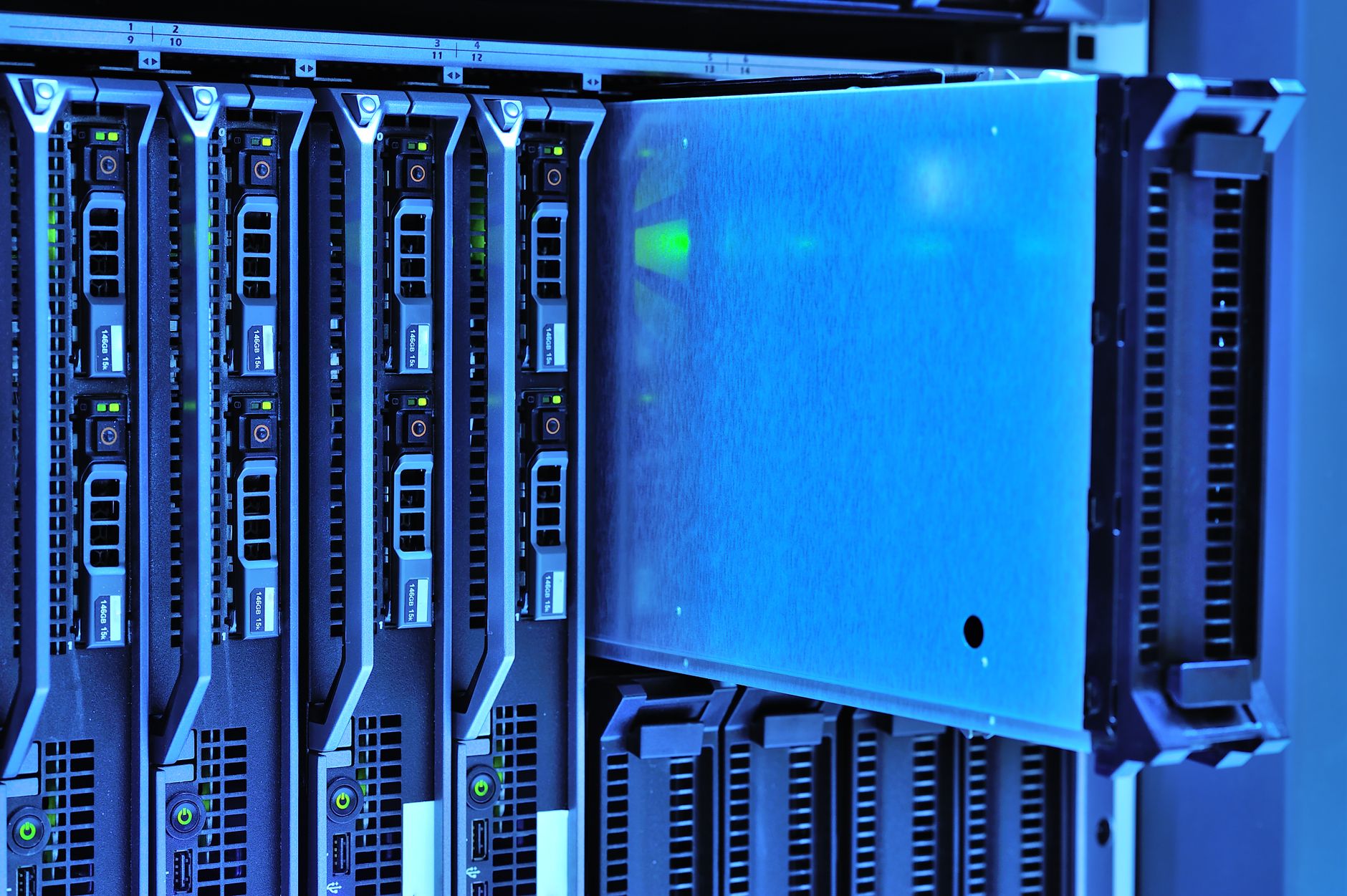
Deploying open-source large language models for commercial software provides companies with total data sovereignty, zero per-query API fees, and protection from vendor lock-in. However, commercial viability depends entirely on the specific license attached to an individual model checkpoint. Organizations must distinguish between true open-source licenses and vendor-specific community agreements that impose usage caps or revenue thresholds.
The Critical Distinction: Open-Source vs. Open-Weight
Most models marketed as "open source" are technically open-weight models. In an open-weight release, the creator distributes the trained neural network parameters, but often withholds raw training datasets, data filtering scripts, and model generation code. Because standard open-source definitions require unrestricted access to underlying source files, open-weight releases frequently rely on custom legal frameworks.
When engineering teams integrate external weights into commercial software, traditional software copyright obligations apply. Legal teams must inspect whether the model allows distribution, modification, integration into hosted services, and output utilization. Assuming that downloadable weights automatically permit unrestricted commercial monetization is a dangerous mistake.
Commercial Licensing Frameworks Compared
Model licenses divide into two broad categories: standard permissive open-source licenses and custom community licenses. Standard frameworks give businesses the freedom to modify and commercialize tools without ongoing vendor supervision.
| License Type | Representative Models | Commercial Terms | Key Restrictions |
|---|---|---|---|
| Apache 2.0 | Gemma 4 (as of April 2, 2026), open Qwen models, Mistral Large 3, OLMo, Granite, gpt-oss-120b | Permissive commercial use, modification, and distribution | Standard attribution and patent grant terms; no revenue or user caps |
| MIT | DeepSeek V4, GLM models | Permissive commercial use and modification | Requires preservation of copyright notices |
| Llama Community License | Llama 3.x, Llama 4 | Commercial use permitted for most organizations | Requires a separate license if monthly active users exceed 700 million |
| Modified MIT | Select Mistral checkpoints | Commercial deployment permitted under specific ceilings | Can include a $20 million global monthly revenue cap |
| Custom Terms of Use | Google Gemma (prior variants) | Commercial use permitted | Enforces acceptable-use policies and restricted use domains |
Permissive Licenses: Apache 2.0 and MIT
Models released under Apache 2.0 or MIT are the safest option for commercial deployment. Models like DeepSeek V4 and GLM variants use the MIT license, allowing organizations to integrate them into commercial architectures without tracking revenue or user numbers. Similarly, Granite, OLMo, open Qwen variants, and Gemma 4 (released under Apache 2.0 on April 2, 2026) enable companies to deliver customer-facing applications without proprietary licensing agreements.
Vendor Community Licenses and Thresholds
Vendor-authored community licenses grant broad access while protecting the creator's enterprise interests against hyperscale competitors. Meta's Llama Community License allows commercial operations for startups and mid-market organizations. However, companies with over 700 million monthly active users must seek an explicit commercial license from Meta.
Similarly, certain Mistral checkpoints governed by a Modified MIT license establish a $20 million global monthly revenue cap. Once an enterprise surpasses that revenue threshold, continuing to use the checkpoint requires renegotiated terms. Custom agreements like the Gemma Terms of Use mandate compliance with specific acceptable-use policies, which legal teams must cross-reference against planned commercial features.
Commercial Benefits of Deploying Open Models
Organizations adopt open-weight architectures to retain control over their intellectual property and achieve predictable operating budgets. Running models on proprietary cloud instances or on-premise hardware ensures that corporate data stays within internal boundaries. This isolation eliminates compliance friction with third-party data retention policies and removes exposure to external API pricing increases.
Model ownership also gives organizations the freedom to adapt weights to their specific domain. Teams can fine-tune architectures, adjust system prompts without vendor interference, and run inference locally without per-question pricing. As of October 2026, models such as Kimi K3 from Moonshot AI provide strong overall open-weight capabilities for general workflows, while DeepSeek-V4.1-Flash provides an efficient option for latency-critical, high-volume products.
Infrastructure Realities and Operational Costs
While open-weight models remove vendor subscription fees, they transfer operational complexity to internal teams. Deploying models requires specialized GPU hardware, low-latency interconnects, and machine learning infrastructure specialists. Engineering teams must manage model quantization, inference serving, autoscaling, and performance monitoring directly.
Open-weight models do not include enterprise-grade Service Level Agreements (SLAs). If an outage occurs or an inference server fails, the organization cannot rely on vendor support teams to resolve the problem. Furthermore, because open-source repositories expose underlying weights and code publicly, security teams must actively audit deployment pipelines, defend against adversarial prompt injection, and monitor container environments for vulnerabilities.
Framework for Commercial Evaluation
To avoid compliance violations and unbudgeted infrastructure expansions, companies should execute a structured evaluation process before rolling models into production:
- Audit the specific model card. Never evaluate a license based on the model family name alone. Check the specific
LICENSEfile distributed with the exact checkpoint version you intend to download, as vendors regularly change terms across releases. - Submit community licenses to legal review. Have corporate legal counsel review acceptable-use policies and threshold stipulations within agreements like the Llama Community License or Gemma Terms of Use.
- Assess training data provenance. Because a model's copyright standing is tied to its training foundations, review vendor technical reports to verify that the training data does not present obvious legal vulnerabilities.
- Run task-specific performance benchmarks. Evaluate candidate models on real proprietary data rather than synthetic public benchmarks to measure actual return on investment.
- Model infrastructure expenses. Calculate compute, memory, and networking costs required to meet production concurrency before replacing managed commercial APIs.
Choosing an open-weight foundation requires balancing licensing flexibility against internal operational capability. Permissive frameworks like Apache 2.0 and MIT eliminate commercial barriers, but successful deployment ultimately rests on an organization's capacity to maintain, secure, and run its own machine learning systems.
Frequently Asked Questions
Can open-source LLMs be used for commercial products?
Yes, models licensed under permissive terms like Apache 2.0 and MIT permit commercial use without financial obligations, while models under community licenses may enforce user caps or revenue limits.
What is the difference between open-source and open-weight LLMs?
Open-weight models share their trained parameters but may withhold training datasets and data curation code, often accompanied by custom community licenses rather than standard open-source licenses.
Does Meta Llama allow commercial use?
Meta's Llama Community License allows commercial applications, but entities with more than 700 million monthly active users must request an enterprise license from Meta.
Sources
Last updated: 2026-10-29
Photo: panumas nikhomkhai / Pexels
Reader Responses (0)
No approved comments yet. Be the first to share your perspective!