
Space Technology: Definition, Core Applications, and Global Trends
Understand space technology, from core definitions and orbital systems to global market projections, commercial trends, and space debris challenges.
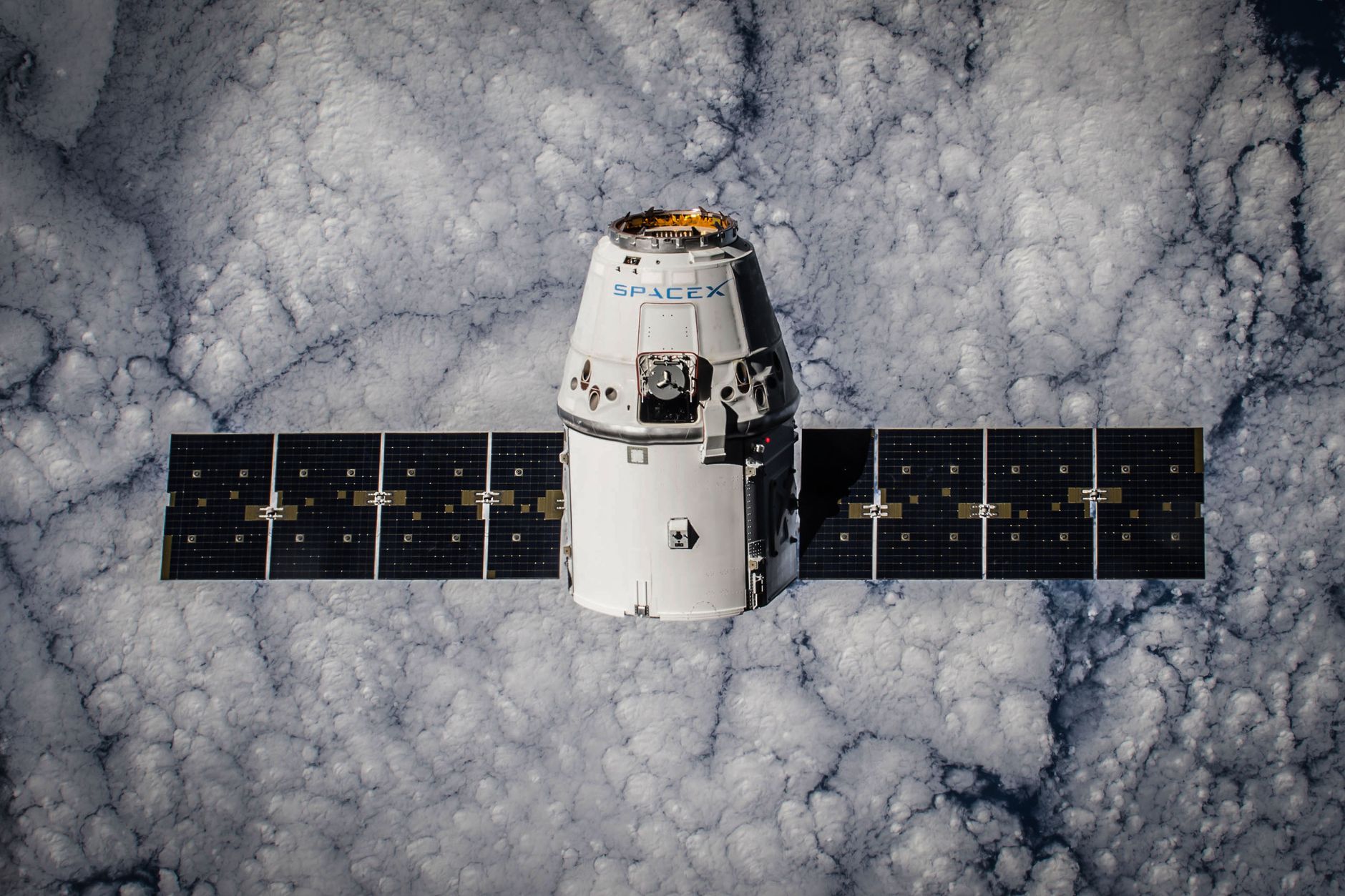
Space technology refers to any hardware, software, or specialized equipment developed to conduct or support activities beyond the Kármán line, which marks the boundary of space at 100 kilometers (62 miles) above Earth's surface. What was once the exclusive domain of national governments has shifted into a commercial arena driven by private enterprises, lowering operational costs and accelerating technological deployment.
Defining Space Technology and Operational Baselines
The operational threshold for space systems begins at the edge of Earth's atmosphere. Technologies engineered for this environment must withstand extreme temperature variations, direct solar radiation, microgravity, and vacuum conditions. These systems fall into two core operational architectures: crewed and uncrewed systems.
Crewed systems include complex orbital habitats and transport vehicles engineered with life-support equipment. The International Space Station (ISS), with a total mass of 420 tons, serves as the primary crewed research station in low orbit. Private crewed spacecraft, such as the SpaceX Dragon, support both routine orbital transport and research logistics.
Uncrewed systems form the backbone of global space operations. The vast majority of operational satellites weigh between 100 and 1,000 kilograms, carrying payloads dedicated to communications, Earth observation, climate monitoring, and scientific data collection.
Orbital Architecture and Ground Support
Deploying payloads requires matching operational requirements to specific orbital altitudes. Spacecraft are routed into distinct flight paths based on their operational objectives and onboard propulsion limits.
- Low Earth Orbit (LEO): Positioned closest to Earth, LEO accommodates high-resolution remote sensing platforms, communications constellations, and crewed stations requiring minimal latency and low transmission power.
- Medium Earth Orbit (MEO): Situated above LEO, MEO provides stable regional coverage, housing primary global navigation systems such as GPS.
- Geosynchronous Orbit (GEO): Matching Earth's rotational speed, GEO allows platforms to hover continuously over a fixed geographic coordinate, providing weather monitoring and broadcast telecommunications.
- High Elliptical Orbit (HEO): Utilizing elongated orbital trajectories, HEO systems serve high-latitude and polar regions that cannot be effectively reached by equatorial GEO satellites.
These space-borne assets coordinate with terrestrial control centers, ground telemetry stations, and receiver dishes. Without robust launch sites and tracking infrastructure on Earth, orbital assets cannot maintain telemetry, execute orbital adjustments, or transfer payload data.
Critical Terrestrial Applications of Space Systems
Space technology directly underpins core functions of modern terrestrial infrastructure. Millions of ground-based computer networks rely on orbital networks to maintain data security and operations.
Financial networks and banking systems depend directly on atomic clocks hosted on navigation satellites to stamp transaction times accurately. Remote sensing satellites monitor agriculture, track weather emergencies, and assess climate changes, while orbital networks provide baseline connectivity for commercial aviation and marine shipping routes.
Defense infrastructures also rely extensively on orbital systems. Uncrewed spacecraft handle early missile defense tracking, tactical reconnaissance, and encrypted communications, preventing critical intelligence blind spots across international operations.
Economic Scale and Commercial Transformation
The space sector is shifting away from historical government procurement models toward aggressive commercial investment. Private enterprises are developing modular launch systems, reusable boosters, and standardized satellite chassis that significantly compress project timelines.
| Metric / Sector Indicator | Value / Projection | Context & Driver |
|---|---|---|
| Market Value (2025) | USD 498.81 billion | Base industry valuation |
| Projected Revenue (2034) | USD 940.44 billion | 7.3% compound growth rate (2026–2034) |
| Long-Term Economy Projection | $10 trillion by 2030 | Comprehensive SpaceTech economic impact |
| Standard Operational Satellite Mass | 100 kg to 1,000 kg | Median payload size across orbital networks |
Private entities such as SpaceX, Blue Origin, and Virgin Galactic drive vehicle development and commercial launch services. At the same time, established defense contractors like Lockheed Martin focus on nuclear propulsion, advanced lunar exploration hardware, and AI-driven autonomous systems.
Regional dynamics are also expanding rapidly outside traditional Western channels. The Asia-Pacific region is scaling its institutional and commercial footprints through high-profile efforts, including China's Space Silk Road initiative and the implementation of Shanghai's Action Plan (2023–2025).
Next-Generation Capabilities: On-Orbit Servicing and Microgravity Labs
Current industrial research focuses heavily on on-orbit servicing, satellite life-extension vehicles, and in-space manufacturing. Instead of abandoning satellites that run out of station-keeping fuel, robotic repair spacecraft are being engineered to dock, refuel, and maintain orbital hardware.
Microgravity environments unlock distinct chemical and physical advantages. Microgravity laboratories on the International Space Station already conduct pharmaceutical research, exploiting weightlessness to cultivate purer protein crystals and refine drug compounds. Future initiatives aim to manufacture advanced semiconductors, specialized optics, and new materials directly in orbit.
Long-range exploration programs also represent significant technological drivers. NASA's Artemis program aims to return human crews to the lunar surface in 2025. These missions serve as testbeds for surface habitats, in-situ resource extraction, and lunar infrastructure that could eventually support asteroid mining and deep-space missions.
Operational Challenges and Emerging Constraints
The rapid expansion of orbital assets creates clear operational bottlenecks. Space is a finite resource, and rising traffic levels introduce physical and structural vulnerabilities that operators must confront.
Space debris poses an ongoing risk to functional assets. Spent rocket stages, retired satellites, and mission fragments circulate at hyper-velocity, meaning even small fragments can disable or destroy operational satellites. In response, operators are developing active debris removal systems to deliberately capture and deorbit non-functional hardware.
Electronic environments are equally constrained. Increased launch volume creates severe spectrum congestion, increasing the risk of radio interference and signal degradation. Space operators must also protect satellite data uplinks and downlinks against communications jamming and emerging anti-satellite weapons systems developed by adversarial nations.
Frequently Asked Questions
What is the formal definition of space technology?
Space technology encompasses any technology developed for conducting or supporting operations beyond the Kármán line, located 100 kilometers (62 miles) above Earth's surface.
How large is the space technology market projected to become?
Valued at USD 498.81 billion in 2025, the SpaceTech market is expected to grow by 7.3% annually through 2034 to reach USD 940.44 billion, with broader projections indicating a potential $10 trillion SpaceTech economy by 2030.
What are the main orbital classifications for satellite operations?
Satellites operate across four primary paths: Low Earth Orbit (LEO), Medium Earth Orbit (MEO), Geosynchronous Orbit (GEO), and High Elliptical Orbit (HEO).
Sources
Last updated: 2026-10-18
Photo: SpaceX / Pexels
Reader Responses (0)
No approved comments yet. Be the first to share your perspective!